Comparison
PromptForge vs free prompt generators
PromptForge is better when the image matters. Free prompt generators pad your sentence with buzzwords like “8k” and “masterpiece”. PromptForge writes a director-grade Blueprint instead: lens, light, mood, a 20+ term exclusion list, and wording tuned to your AI engine. A free generator is fine for a quick filler image.
By Chad Knoblock · Published · Updated
| free prompt generators | PromptForge | |
|---|---|---|
| How it adds detail | Stacks quality buzzwords and adjectives | Makes real choices: lens, light, mood, composition |
| Things to keep out | Rarely included | A 20+ term exclusion list every time |
| Engine wording | One style for every engine | Rewritten for the engine you pick |
| Help for beginners | None — you get a longer sentence | The Director explains choices in plain words |
| Fixing a miss | Start over | 3 free remixes per Blueprint |
Same idea, side by side.
Three real pairs. The left image came from the short prompt; the right image came from the full Blueprint, run in the same engine.
Cinematic portrait
What most people type
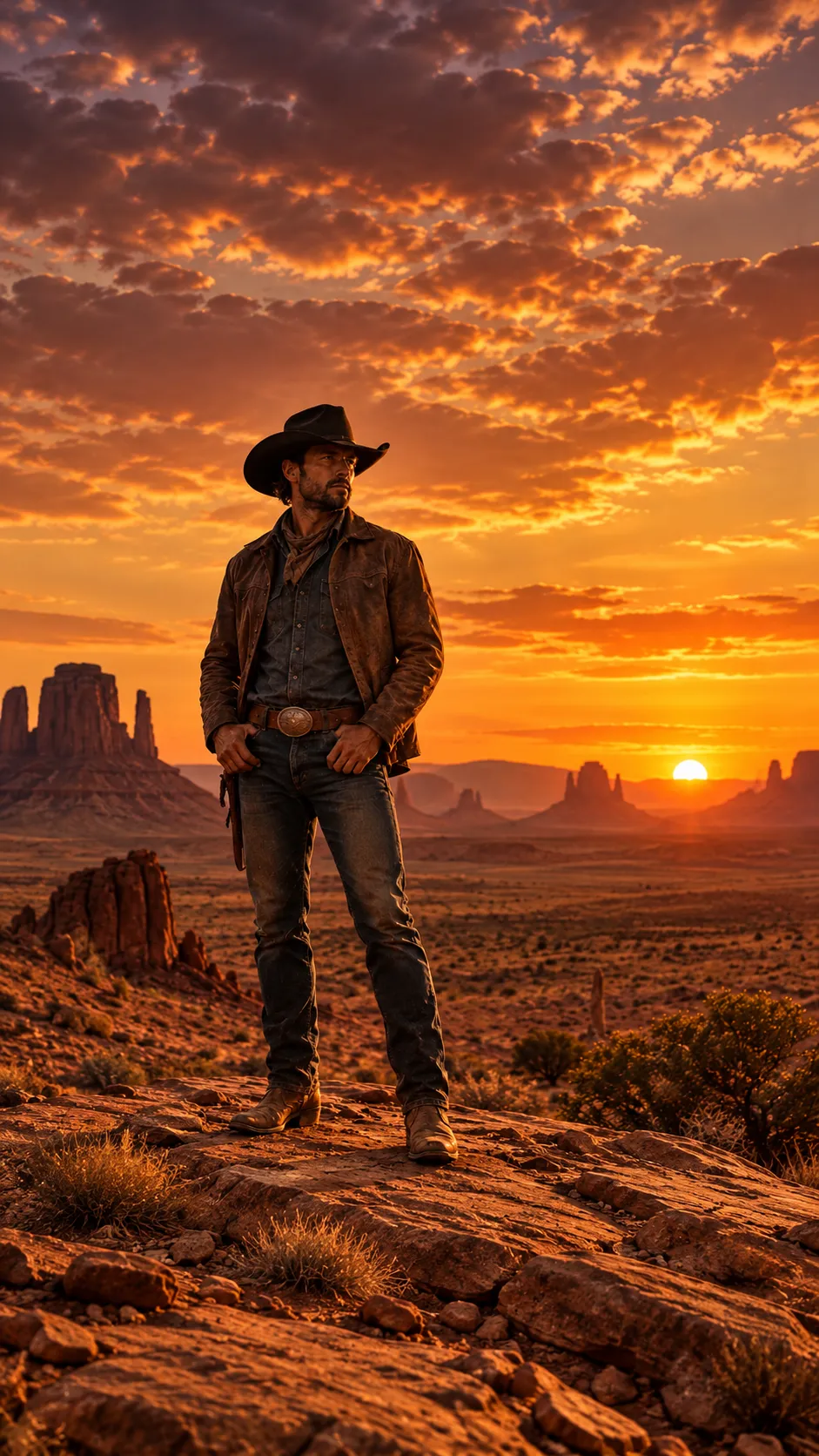
A cowboy standing in the desert at sunset.
A real PromptForge Blueprint
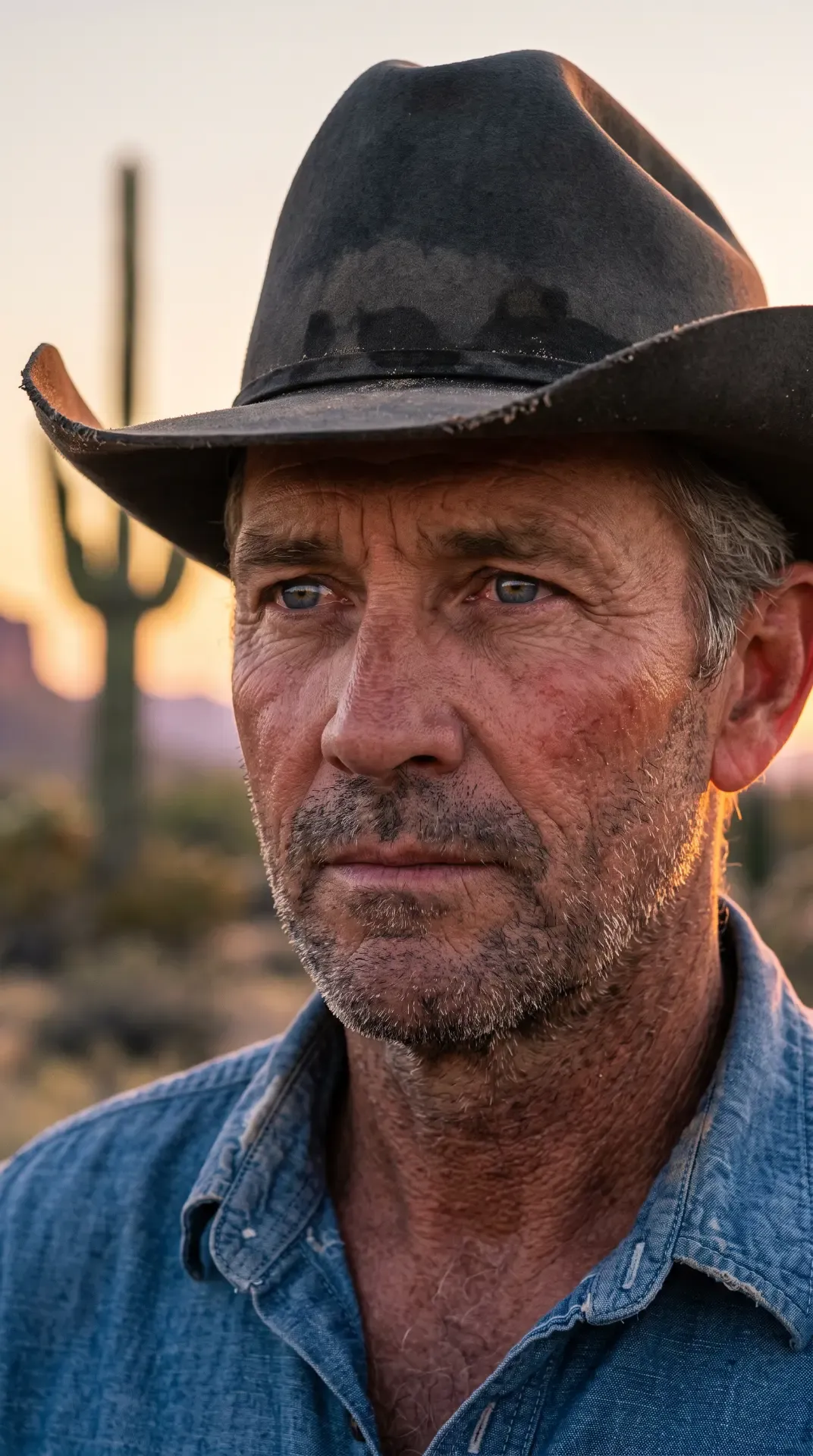
A raw, high-resolution documentary portrait shot on a 35mm full-frame camera with an 85mm f/1.4 lens set at f/2.0, capturing an intimate, vertical 9:16 close-up of an elderly Sonoran cowboy. The framing is tight on his weather-beaten face, extending from his collarbone up to the creased crown of his hat, creating a deeply personal photographic encounter. His skin is extraordinarily detailed and unpolished, marked by decades under the desert sun—deeply etched crow's feet radiating from his eyes, pronounced forehead furrows, windburned high cheekbones, and rough skin pores glistening with a thin sheen of sweat. Fine grains of reddish clay dust are caught in the crevices of his skin and settled into his uneven, coarse grey-and-black stubble.
His gaze is quiet and steady, his steel-blue eyes reflecting the warm amber glow of the setting sun with sharp specular highlights in the pupils, revealing delicate red capillaries in the sclera and tiny iris patterns. He wears a heavily worn, dark charcoal beaver-felt Stetson hat, tilted slightly forward; the hat band shows dark salt stains from dried perspiration, while the brim displays micro-fraying along its stiffened edge and a light dusting of fine sand. Below his neck, the open collar of an authentic, faded indigo chambray shirt reveals visible thread weave, worn cotton fibers, and sun-bleached patches around the neckline. The scene is illuminated by low-angle, directionally soft late-afternoon golden hour sunlight coming from the right frame, casting a warm golden-orange key light across his right cheekbone and jaw, while the left side of his face recedes into soft, cool indigo ambient shadow illuminated by the sky.
A subtle rim light catches the edge of his cheek, ear, and stray silver hairs at his temple. In the softly blurred background, the desert landscape dissolves into a shallow depth of field, with soft circular bokeh melting out-of-focus saguaro cacti, low creosote brush, and the warm purplish-orange gradient of the dipping sun behind distant sandstone bluffs. The overall image has the organic, tactile texture of 35mm film photography with fine grain, realistic skin translucency, high dynamic range depth, natural film color balance reminiscent of Kodak Portra film stock, crisp focal precision on the forward eye, and zero digital sharpening or artificial smoothing.
Living streetscape
What most people type
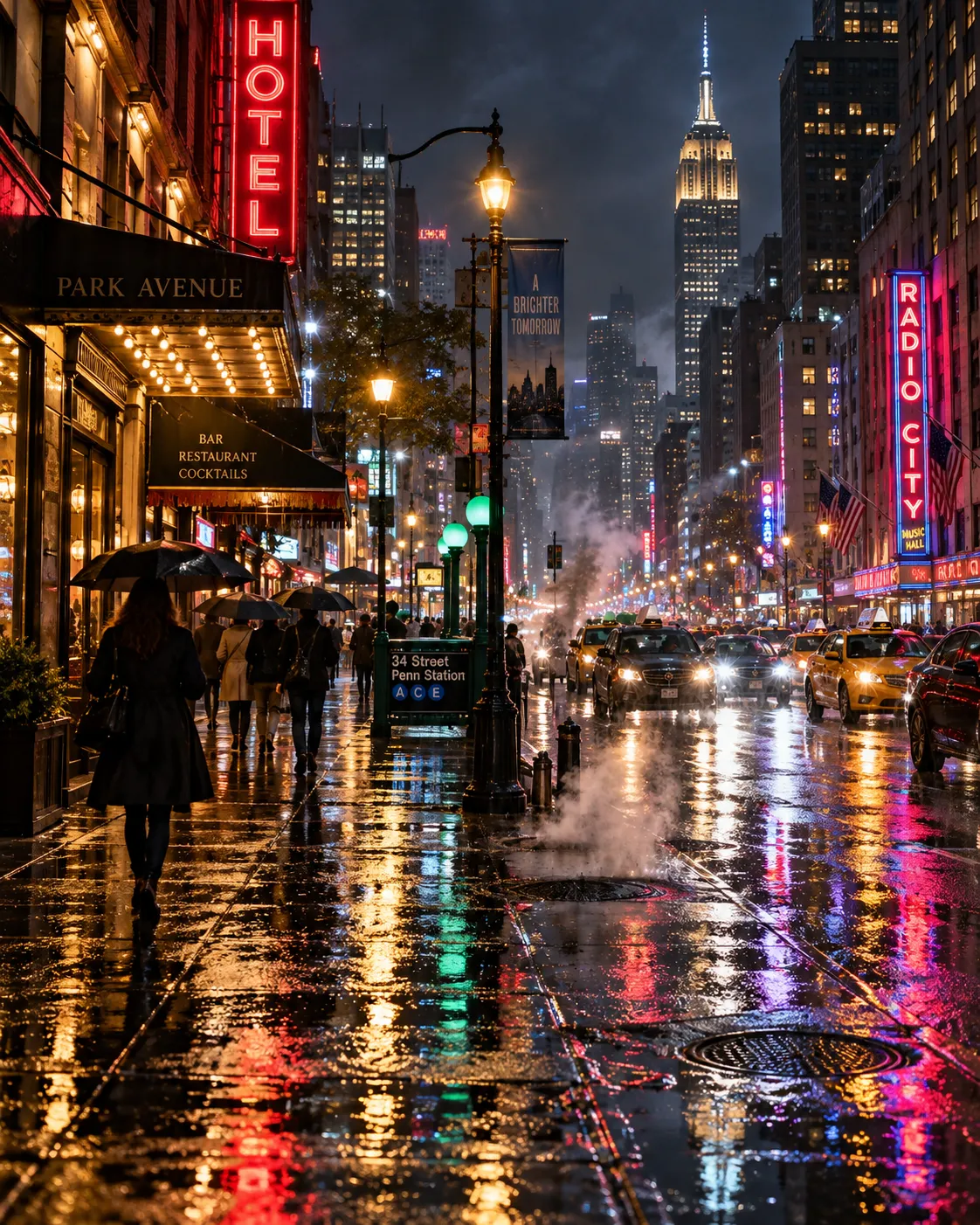
A city street at night in the rain.
A real PromptForge Blueprint
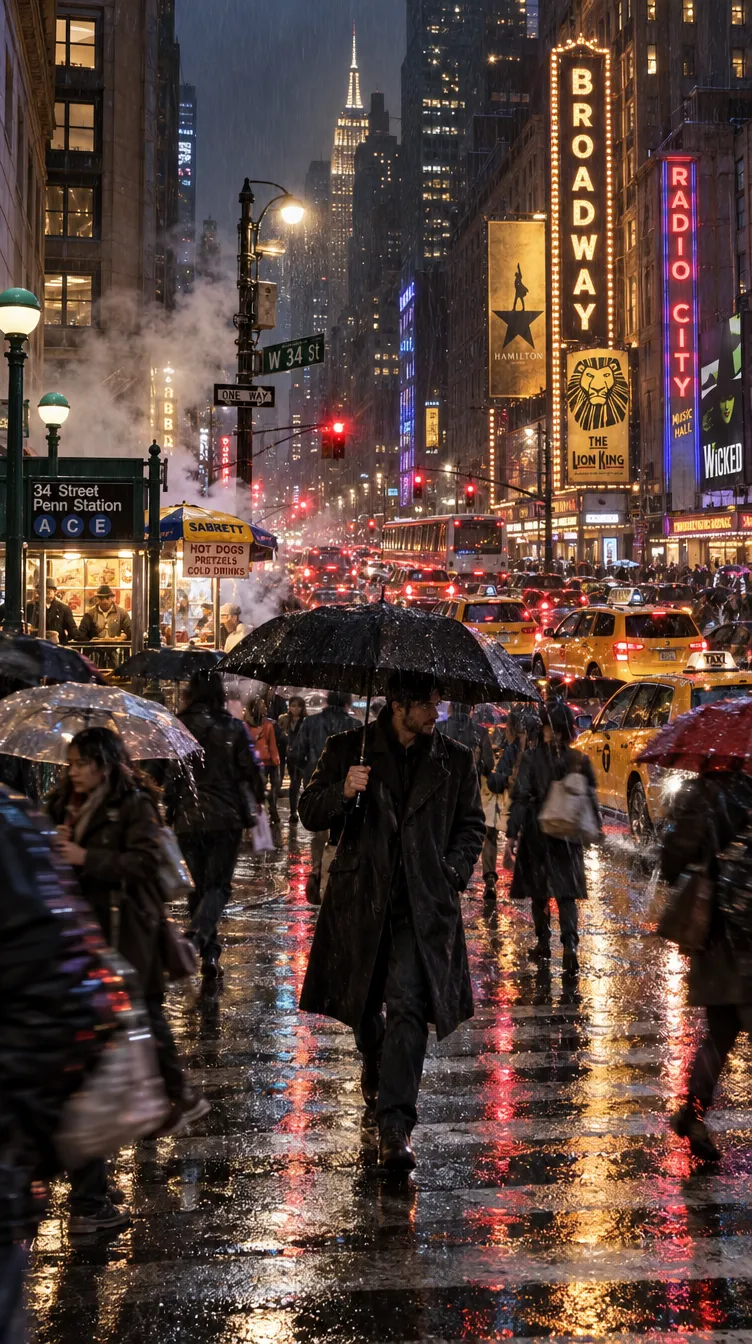
A bustling, cinematic vertical 9:16 street photograph capturing the chaotic, living rhythm of a rain-drenched Midtown Manhattan intersection at midnight. The heavy downpour creates thick, visible vertical rain streaks and mist, catching the vibrant multi-colored light from glowing Broadway theater marquees, flashing neon deli signs, and red traffic signals. The street is brimming with energy and movement: yellow classic taxicabs are jammed bumper-to-bumper, their headlights casting long white beams through the falling rain and exhaust steam, while red taillights leave rich glowing trails across the soaking asphalt. A dense tide of late-night pedestrians surges through the wet crosswalk, holding an array of rain-slicked umbrellas in black canvas, transparent vinyl, and deep crimson.
Rain droplets splash rhythmically against the asphalt, creating continuous micro-ripples in standing pools of water that act as dark, liquid mirrors, reflecting inverted neon lettering and glowing brake lights. Near the foreground center, a sharp focal anchor emerges through the motion-blurred crowd—a lone figure in a wet, dark wool trench coat with collar turned up against the storm, holding a glistening black umbrella dripping water down its steel frame. Steaming subway grates spew thick white vapors that tangle with rain haze between historic stone facades, ornate fire escapes, and towering commercial skyscrapers reaching up into the dark cloud deck. A street food vendor’s metal cart sits near the sidewalk corner, emitting warm yellow tungsten light and curling steam into the wet night air.
Photographed on a 35mm anamorphic camera setup with an f/2.0 aperture and a deliberate 1/60s shutter speed, capturing organic motion blur across moving vehicles and walking feet while preserving crisp detail on the central pedestrian and nearby water droplets. The color grade is rich and cinematic, featuring deep indigo night shadows, warm sodium-vapor amber, vivid cherry red taillights, and electric teal highlights off wet glass surfaces. Fine film grain, natural anamorphic lens flare flares extending horizontally from headlights, damp wardrobe textures, and realistic water spray thrown up by idling car tires weave together into a raw, immersive, high-density masterpiece of urban life in a storm.
Luxury product
What most people type
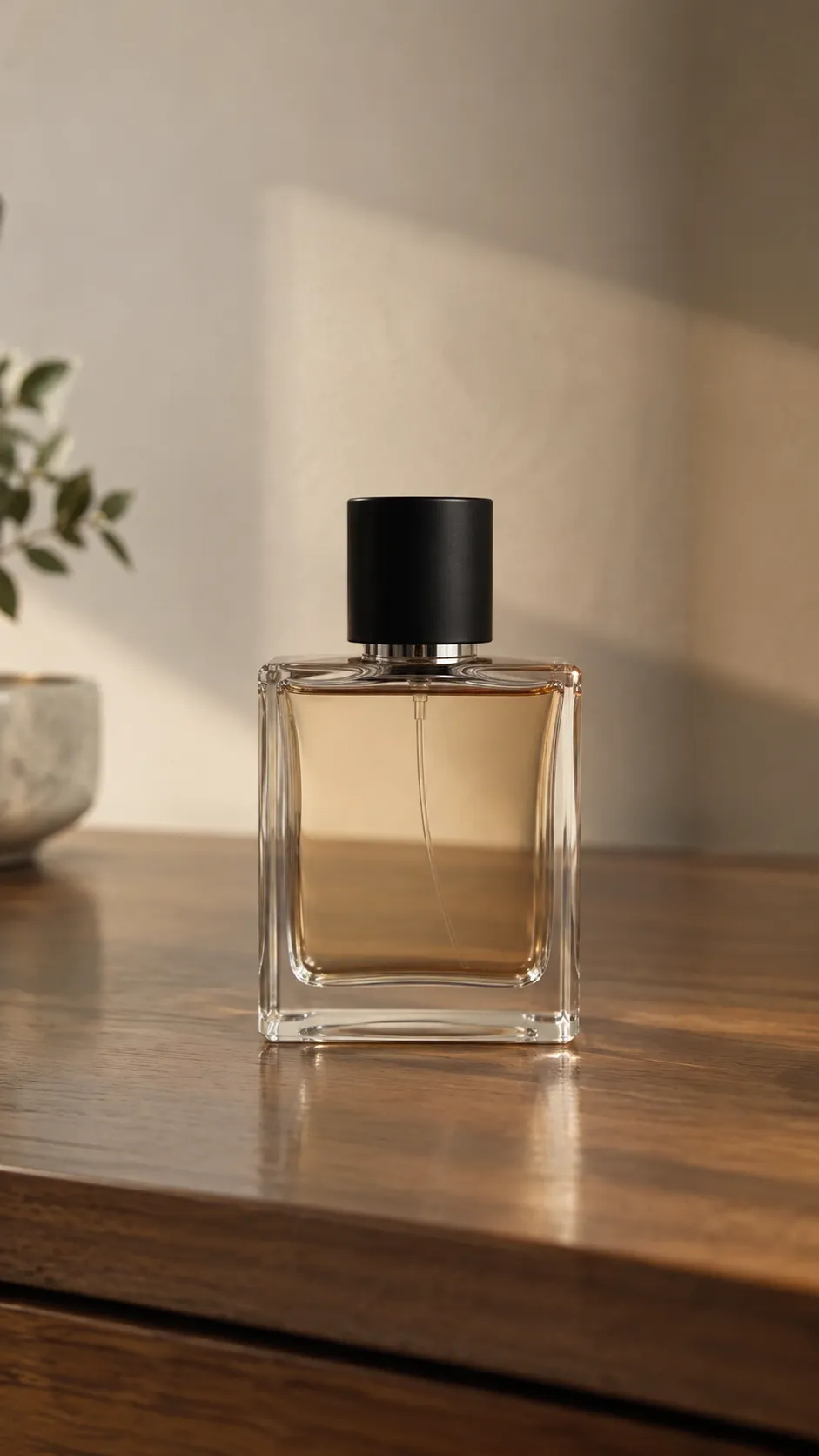
A bottle of perfume on a table.
A real PromptForge Blueprint
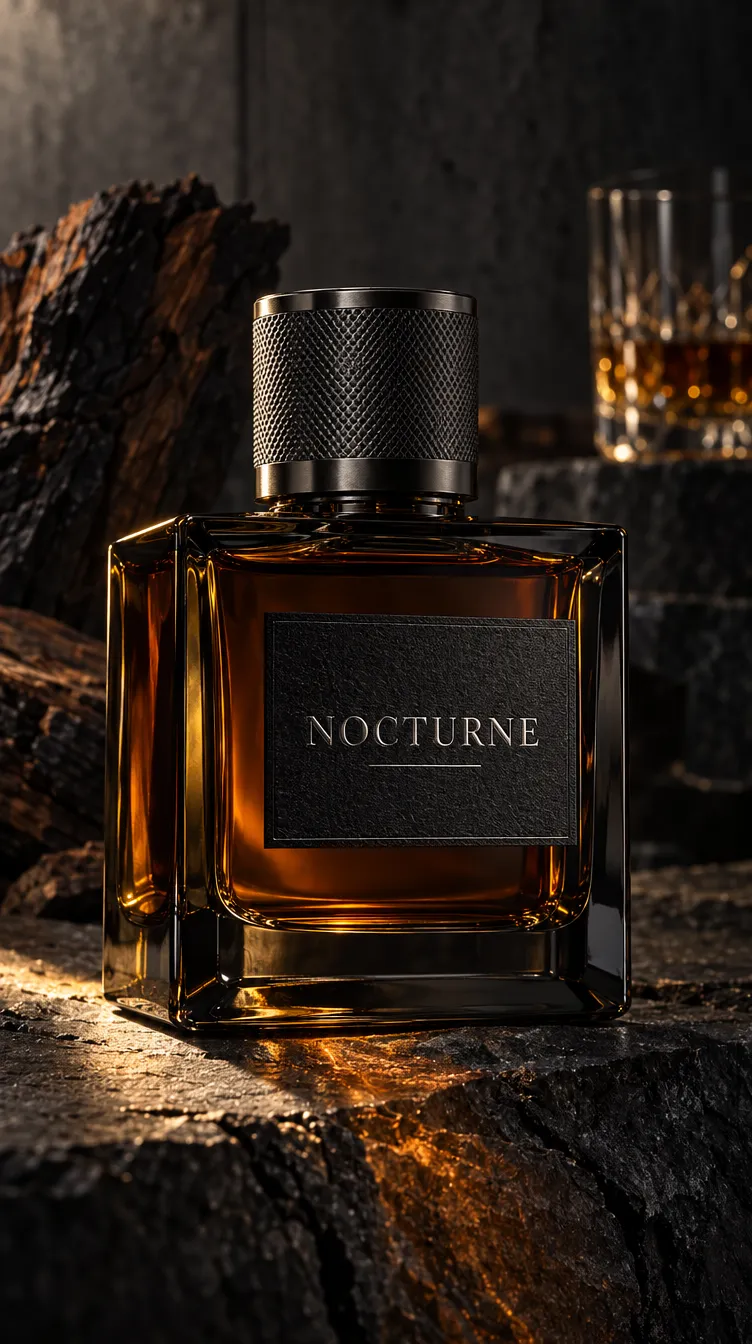
An elite commercial luxury fragrance advertisement for a prestigious men's publication, showcasing a heavy, square-cut smoked obsidian glass cologne vessel standing with formidable architectural weight upon a slab of dark charred slate stone. The solid crystal base features razor-sharp bevels and precise geometric cuts that catch selective highlights along its dark edges. Inside the thick lead glass chamber sits a rich, luminous cognac amber fragrance liquid, glowing with deep inner warmth and displaying a crisp physical meniscus along the interior walls. The front of the bottle is adorned with a tactile, heavy-stock matte black paper label featuring finely debossed silver foil serif typography that reads 'NOCTURNE', crisp and impeccably sharp under tight macro focus.
Capping the vessel is a weighted, knurled gunmetal cap with a matte brushed metallic finish that reflects a subtle, cool specular highlight. The scene is enveloped in a dark, atmospheric low-key chiaroscuro lighting scheme, where a single controlled streak of warm directional tungsten light pierces the brooding environment from a low side angle. This beam strikes the amber liquid directly, projecting intense, glowing copper and golden caustics across the fine clefts and micro-textures of the dark slate table surface. A precise, razor-thin rim light traces the opposite edge of the obsidian bottle, cleanly separating its dark silhouette from a soft-focus background of slate-gray concrete and deep, velvety shadows.
Positioned out of focus in the atmospheric distance is the faint, organic form of a charred cedar block, adding subtle textural depth to the masculine composition. The vertical 9:16 composition is framed as a low-angle macro hero shot using a 100mm lens at f/2.8, achieving an extremely tight depth of field that renders the debossed metallic lettering and faceted front edge in tack-sharp focus while allowing the surroundings to fall into a smooth, moody blur. The color palette is calibrated for dark luxury editorial aesthetic: deep obsidian blacks, slate charcoal grays, rich cognac amber glow, and crisp silver accents, characterized by ultra-clean physical optics, zero digital noise, high dynamic range in dark tones, and hyper-realistic glass refraction.
Why buzzwords do not fix the AI look
Words like 8k, masterpiece and ultra detailed tell the engine to try harder, but not what to try. The lens, the light and the mood are still left to the engine, so it fills them with the most average answer it knows. That is AI slop: smooth, bright and forgettable, just sharper.
Look at the cowboy example above. The short prompt says a cowboy, desert and sunset. The Blueprint chooses an 85mm lens at f/2.0, a tight vertical frame from collarbone to hat, and a documentary look. Those are decisions, not adjectives, and they are what change the picture.
When a free generator is enough
If you only need a quick filler image and any decent result will do, a free generator is fine. PromptForge earns its place when the image matters: a brand post, a product shot, or a character who has to look the same next week. Story Bible keeps those characters and worlds consistent across Blueprints.
What is inside a Blueprint
Every Blueprint answers the questions a short prompt leaves to chance. Scene architecture decides what sits in the foreground, the subject and the background. Lens and focus pick the glass: an 85mm at f/2 for an intimate portrait, a 24mm for a wide street. Light design places the light on purpose, such as golden hour or a single hard side light. Texture and material call out skin pores, wet asphalt or brushed metal. Color and film set the grade, such as a Kodak Portra look.
Then comes the exclusion list: 20+ things to keep out, such as waxy skin, warped hands and digital halos. Finally the whole brief is rewritten in the wording your engine understands best. Midjourney rewards dense phrases and settings, ChatGPT wants flowing sentences, and Flux cares about exactly where things sit.
What it costs, in plain numbers
You start with 7 free Blueprints over 7 days, with no card. After that, Creator is $19 a month with 300 credits, Pro is $39 with 1,050, and Studio is $129 with 4,050. Those totals include the +50 monthly bonus for the first 500 founding members. One Blueprint costs one credit, and each Blueprint comes with 3 free remixes. All payments are final, and you can cancel any time from Settings so future charges stop.
Limits worth knowing
PromptForge does not make or edit images. It writes the prompt, copies it, and opens your engine. ChatGPT can open with the prompt already filled in. Midjourney's website does not accept a prompt in a link, so there you paste it yourself. If you add a reference photo, it is used for that one Blueprint and is not stored.
A Blueprint raises your odds; it cannot promise a perfect first image. Engines still vary from run to run. That is why the free remixes exist: tell the Director what missed and get a corrected Blueprint without spending another credit.